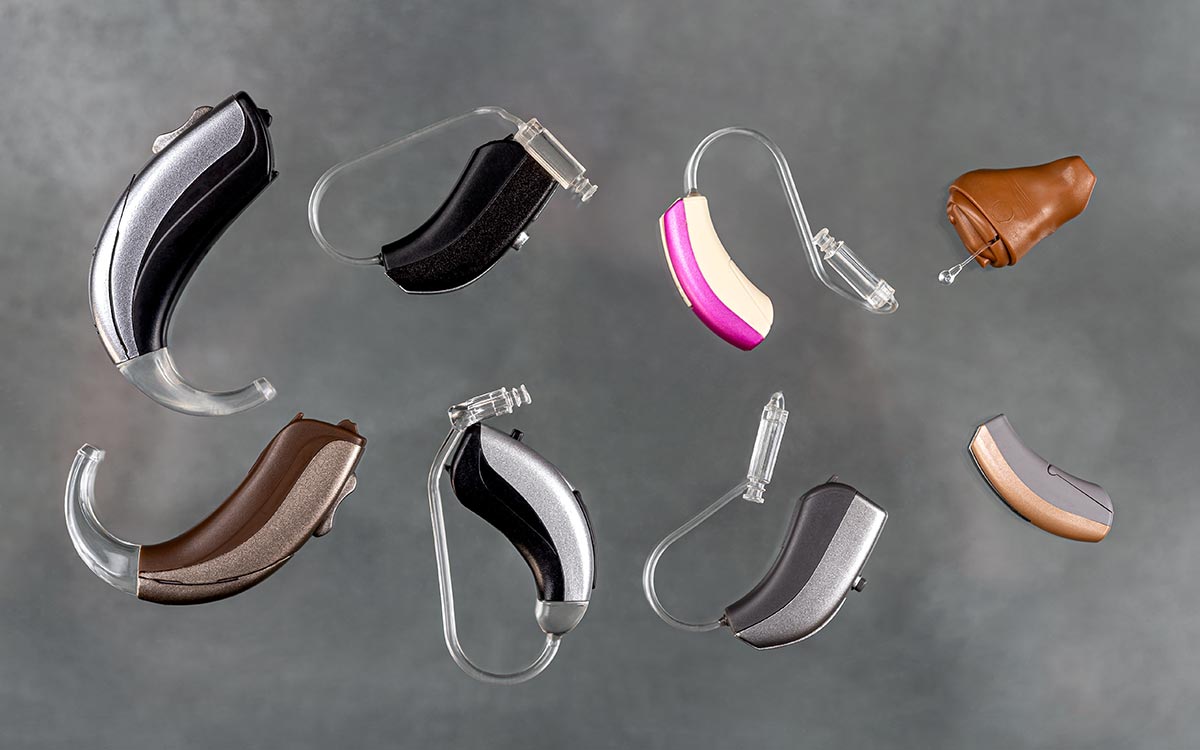
The total amount of hearing aid designs and technology levels on the market today can make the selection process feel complicated. But no matter your needs, there’s an auditory solution for every lifestyle, preference, and degree of hearing loss. The key is merely choosing the one that fits you best.
Feeling certain about your choice begins with knowing how different hearing aids function and compare. We are going to study the primary styles available today to help you understand what sets each option apart.
Understanding ITC Models
The Design:
ITC models are custom-made to sit within the ear canal, though a small part of the shell remains visible in the ear’s outer portion.
Common Advantages:
- Provides a subtle appearance compared to traditional styles
- Tailored to the unique contours of your ear
- An effective option for those with moderate hearing needs
ITC devices offer an excellent equilibrium between visibility and functionality, making them an ideal choice for first-time users.
Exploring IIC (Invisible-in-Canal) Choices
What they represent:
IIC models are the most miniature custom-fitted hearing solutions you can choose. This style fits deep in the ear for an entirely covert appearance.
User Benefits:
- Maximum aesthetic discretion
- Microphone placement assists in mimicking the ear’s natural sound collection
- Designed for ease with a highly small footprint
IIC devices are primarily aimed at patients with moderate hearing needs who want their technology to remain completely unnoticed.
Understanding In-the-Ear (ITE) Devices
What they are:
These models fill either the full or bottom half of the outer ear bowl. They are custom-made to match the shape of your ear.
Why users favor ITE:
- The bigger size makes it feasible to include more internal components and longer-lasting batteries
- Simpler to handle for those with dexterity challenges
- An adaptable option that can address even significant levels of hearing loss
Many patients prefer ITE devices because they provide an integrated, self-contained design that doesn’t hook over the ear.
Exploring BTE (Behind-the-Ear) Designs
Technical Detail:
BTE hearing aids rest securely behind the ear. Sound moves into the ear canal through an internal tube or custom earmold.
Why users choose them:
- Regarded as one of the most reliable and robust designs available
- Useful for nearly every level of hearing impairment
- Big enough to include sophisticated software and modern rechargeable technology
The combination of user-friendliness and powerful sound makes BTE aids an excellent contender for many patients.
Modern RIC (Receiver-in-Canal) Models
Mechanical Setup:
The RIC design keeps the main body on the back of the ear while moving the receiver into the ear canal itself.
Market Appeal:
- Provides a remarkably crisp and lifelike listening experience
- Small, feather-light, and comfortable
- Excellent for multiple levels of hearing loss
The combination of style and high-end performance renders RIC models an ideal choice in the modern market.
Long-Term “Set and Forget” Devices
Introduction:
These devices are placed deep in the ear canal by an audiology professional and can stay in place for several weeks at a time.
Why individuals choose them:
- Perfect for users who want to bypass the routine of handling hearing aids daily
- Offers an entirely discreet solution for hearing health
- You can go about your whole life—including sports and rest—while wearing them
For a “hands-off” approach to hearing assistance, extended-wear technology is the top recommendation.
Wireless Bluetooth Connectivity
What they are:
These are modern devices equipped with radio technology to sync with your personal electronics and televisions.
Digital Advantages:
- Enjoy immediate audio streaming from your phone or TV right into your ears
- Adjust settings via an app
- Perfectly matched for the requirements of an advanced, connected individual
Most contemporary RIC, BTE, and ITC hearing aids now offer an advanced version.
Middle-Ear Implants
What they represent:
This technology requires a surgical procedure to place a device that mechanically stimulates the bones of the middle ear.
Why implants are used:
- A viable route for patients who are unable to wear standard acoustic devices
- This is a specialized alternative for those with chronic ear canal sensitivity.
A complete consultation with an ENT professional is necessary before considering an auditory implant.
Choosing the Right Model for You
Since each hearing aid design has distinct assets, the best choice is based on your specific hearing needs, your daily activities, and your aesthetic goals. By visiting an expert, you can investigate various models and see which one feels most natural to you.
If you’re ready to explore the possibilities, schedule an auditory evaluation today. Your future of confident communication starts with this first evaluation.
Sources:
https://www.mayoclinic.org/diseases-conditions/hearing-loss/in-depth/hearing-aids/art-
20044116
https://www.hearinglife.com/hearing-aids/types
https://www.nidcd.nih.gov/health/hearing-aids